Research describes Walleye feeding around light and water clarity. It does not prove a bait wins today.
Walleye · evidence-linked bait guide
Walleye baits. When they fit. Why we chose them.
Browse every bait in PrimeBite’s reviewed Walleye catalog. See where each idea came from, what it means, and where local rules or ice safety come first.
How to read this guide
Evidence first. Fishing choices second.
Checked guides support broad places, methods, bait types, safety, and fish care. Each exact excerpt keeps its limit.
PrimeBite turns broad evidence into useful starting choices. The order and situation groups are fishing judgment, not a head-to-head bait trial.
14baits77exact excerpts23source documents0sponsored picks
Browse by situation
Nine useful ways into the same 14-bait catalog.
Each link points to a bait card below. Baits can fit more than one situation, but each card appears only once.
Cold water
Early spring, late winter, or any time the water is cold and the fish are slow to chase. Try slowing down and staying near the bottom.
Warming water
Late spring. The water is warming, the fish often get more active, and you can try moving a bait faster.
Summer, deep
Summer days. The fish often sit deeper, so the job is getting a bait down to them.
Dawn, dusk and cloudy days
The light is down, so walleye often move shallower. These are the baits you can work up shallow.
Stained or murky water
The fish have more than sight to go on. Try something with vibration, flash or wobble, and a brighter color.
Rivers and current
A river, or the current at an inlet, outlet or narrows. Try starting at the current breaks and the deeper water beside them.
Trolling open water
In a boat, with the fish spread out or nowhere obvious. Try covering water until you find them.
Live-bait rigs
These bait picks use live bait and stay ranked with artificial bait for Walleye. Check your local rules before you fish, and never dump or move unused bait or bait-bucket water.
Ice
Fishing through the ice. Try keeping the bait close to the bottom, and try the hours right before and right after dark.
Ice safety: No ice is ever completely safe. PrimeBite cannot tell you whether the ice where you are is safe. Follow your local ice guidance before you go out.
The full catalog
All 14 Walleye baits. No paid order.
This catalog order is not a ranking. PrimeBite’s personalized picks can change with your answers, while this page stays a plain browse guide.
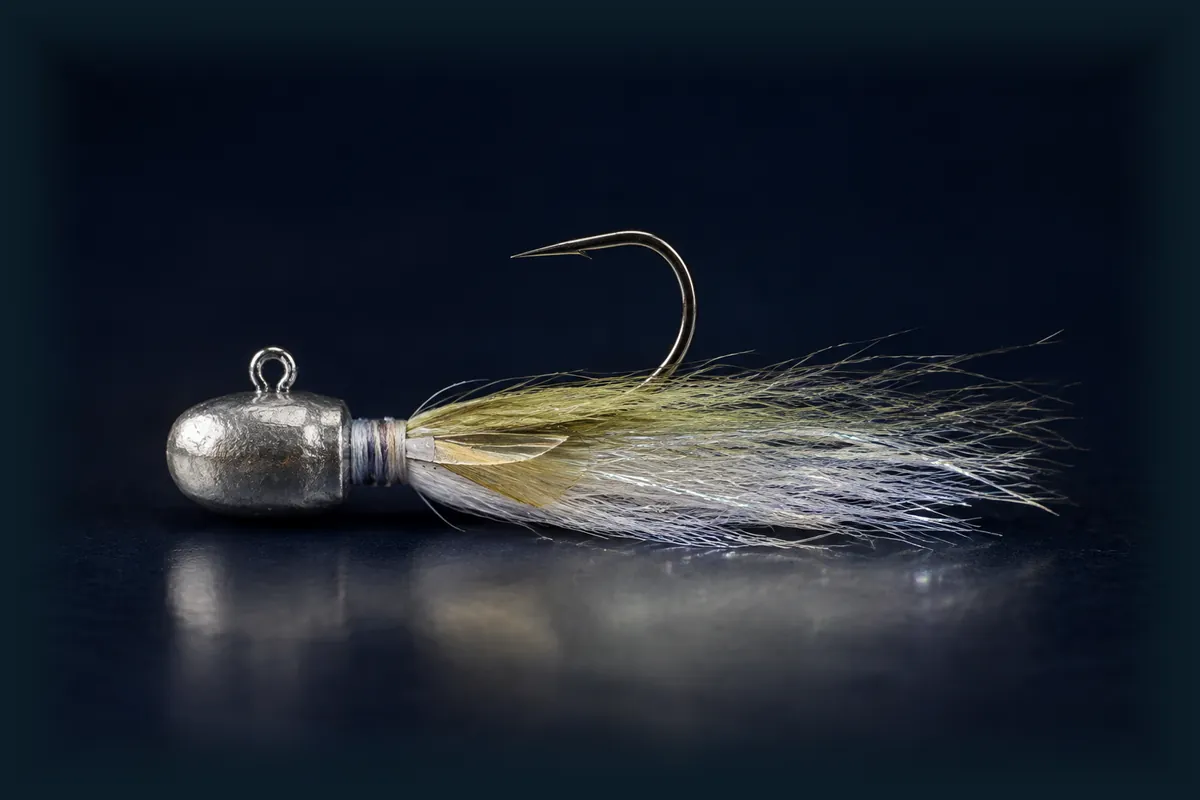
Jig
Strong guidanceA weighted hook head you work along the bottom.
Open water
Rules and fish care
- Walleye have sharp teeth and sharp gill-plate edges. Use pliers, forceps or cutters to unhook one, and keep treble hooks clear of your fingers, legs and clothes when you cast and when you land a fish.
- Planning to release? Artificial or unbaited lures are the safer choice for the fish. It is a preference, never a promise.
WhenStart here in cold water, and any time you want the bait right on the bottom.
HowTry a slow, steady retrieve that keeps the jig in touch with the bottom.
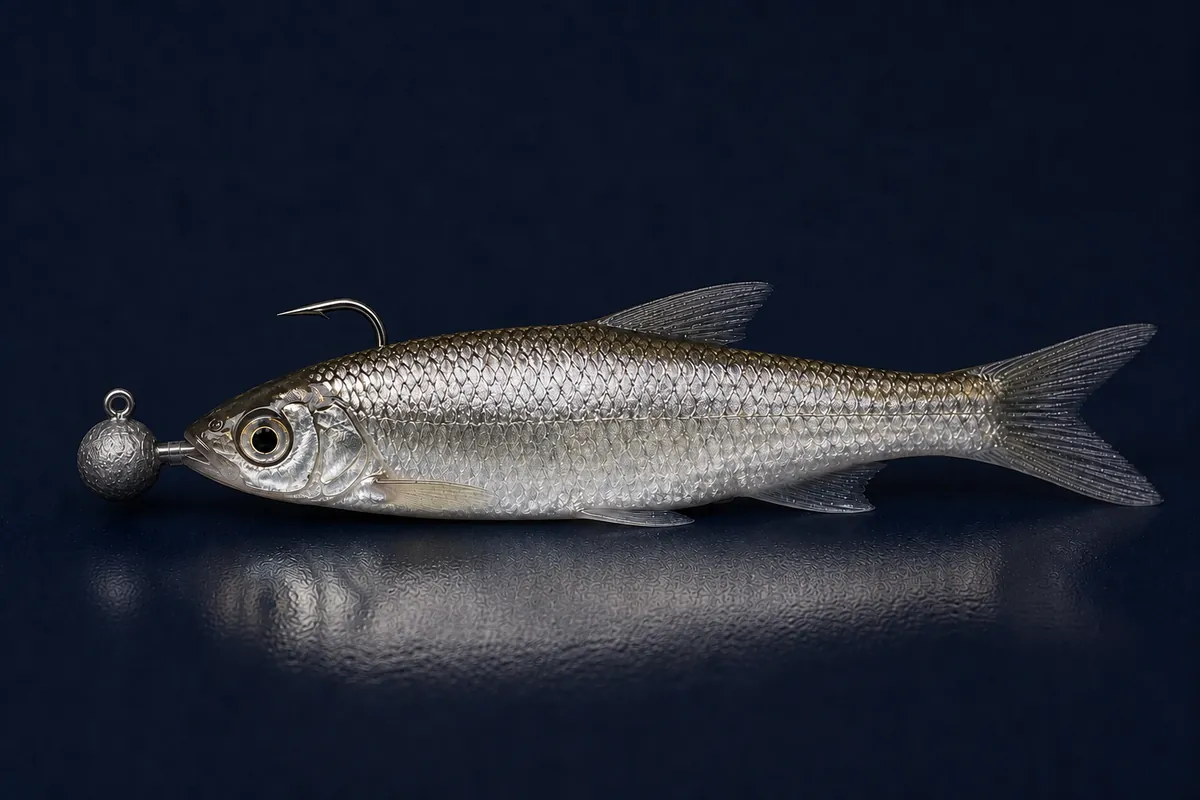
Jig tipped with a minnow
Strong guidanceThe same jig with a live minnow on the hook.
Live baitOpen water
Rules and fish care
- Live bait · check local rules · never dump or move bait
- Never tip unused bait, baitfish or bait-bucket water into any water. Never carry bait, water or live catch from one water to another. It spreads invasive species and disease, and it may be against the law. Bin unused bait and follow your local disposal rules.
- If a walleye is hooked deep — in the throat, the gills or the gut — cut the line close instead of pulling the hook out. It is the better bet, not a guarantee.
- Walleye have sharp teeth and sharp gill-plate edges. Use pliers, forceps or cutters to unhook one, and keep treble hooks clear of your fingers, legs and clothes when you cast and when you land a fish.
- Planning to release? Artificial or unbaited lures are the safer choice for the fish. It is a preference, never a promise.
How-to details and their source links stay hidden until you accept the local-rules and ice warning. Read and accept the notice.
WhenTry it in cold water.
HowTry the same slow work as a plain jig, and try it along river current breaks.
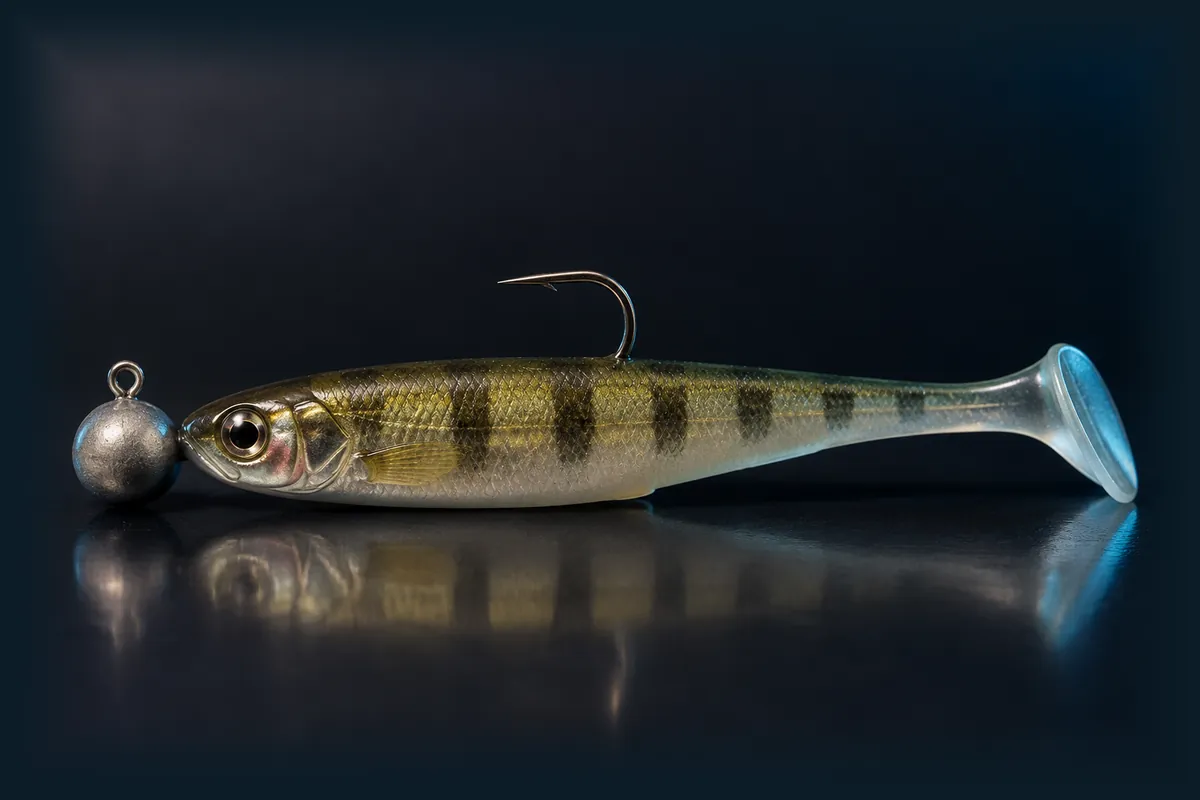
Soft plastic on a jighead
Medium guidanceA soft plastic body threaded onto a plain jighead.
Open water
Rules and fish care
- Walleye have sharp teeth and sharp gill-plate edges. Use pliers, forceps or cutters to unhook one, and keep treble hooks clear of your fingers, legs and clothes when you cast and when you land a fish.
- Planning to release? Artificial or unbaited lures are the safer choice for the fish. It is a preference, never a promise.
WhenStart around 3 inches. Try 4 to 5 inches if you are after bigger fish.
HowTry a slow, steady wind just off the bottom so the tail keeps kicking.
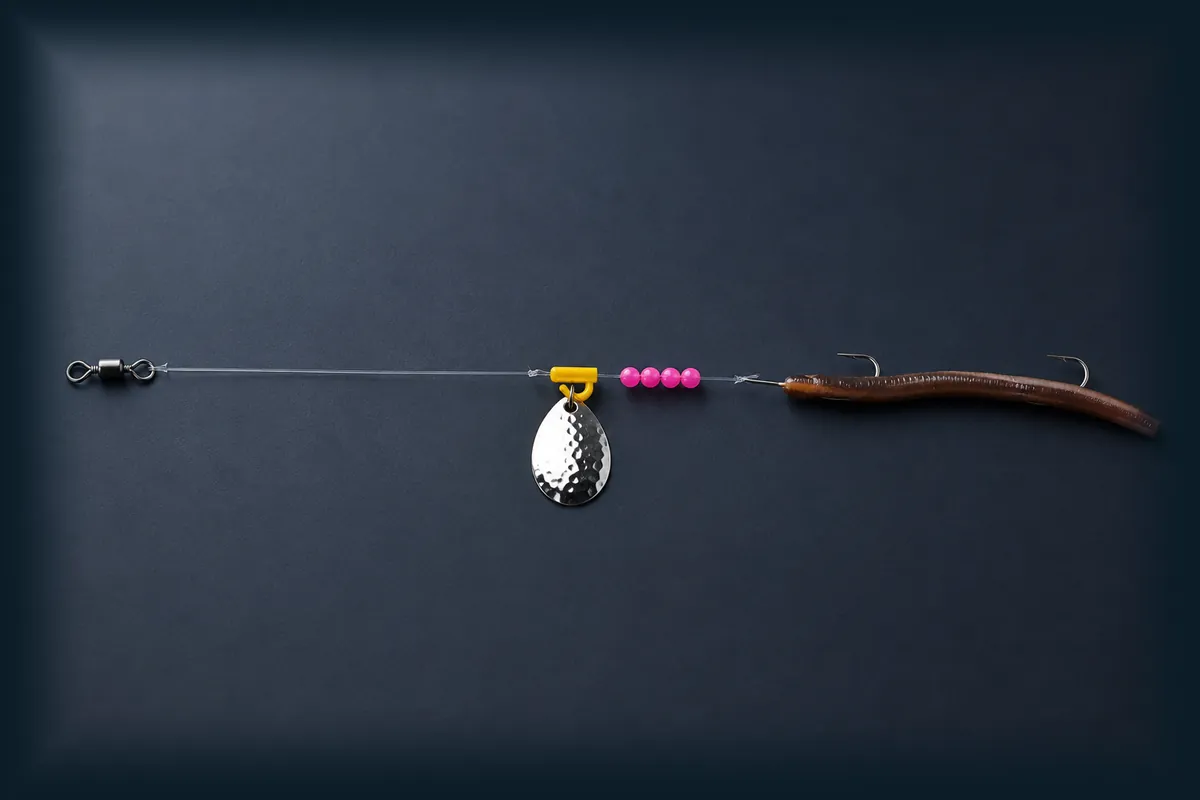
Crawler harness
Strong guidanceA spinner blade and beads ahead of a hook holding a nightcrawler.
Live baitTrollingMultiple hooks possibleOpen water
Rules and fish care
- Live bait · check local rules · never dump or move bait
- Never tip unused bait, baitfish or bait-bucket water into any water. Never carry bait, water or live catch from one water to another. It spreads invasive species and disease, and it may be against the law. Bin unused bait and follow your local disposal rules.
- If a walleye is hooked deep — in the throat, the gills or the gut — cut the line close instead of pulling the hook out. It is the better bet, not a guarantee.
- Trolling · check local rules
- Hooks · check local rules
- Walleye have sharp teeth and sharp gill-plate edges. Use pliers, forceps or cutters to unhook one, and keep treble hooks clear of your fingers, legs and clothes when you cast and when you land a fish.
- Planning to release? Artificial or unbaited lures are the safer choice for the fish. It is a preference, never a promise.
How-to details and their source links stay hidden until you accept the local-rules and ice warning. Read and accept the notice.
WhenTry it as the water warms in late spring, and through summer.
HowTry casting it, or trolling it from a boat, and move it slowly and steadily so the blade keeps turning.
RigTry the harness behind a weight that keeps it near the fish.
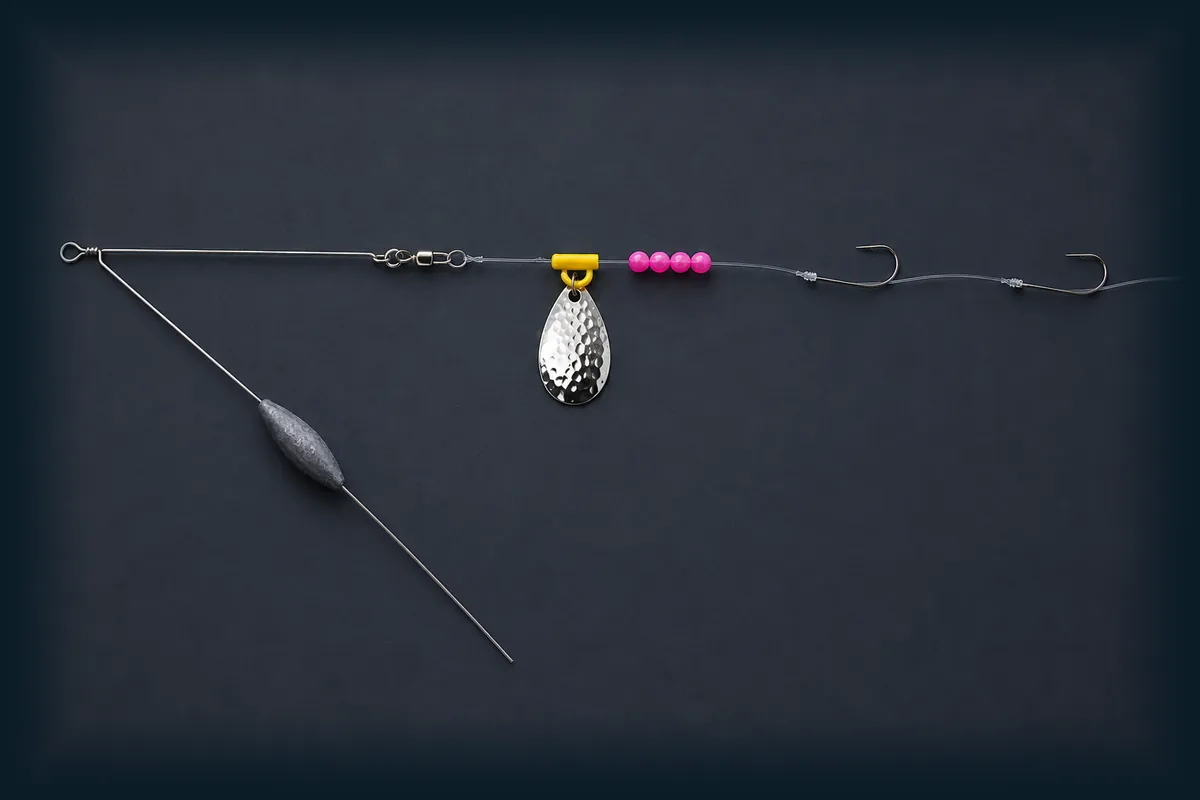
Bottom bouncer and crawler harness
Strong guidanceA wire weight that ticks along the bottom with the harness riding just above it.
Live baitTrollingMultiple hooks possibleOpen waterBoat only
Rules and fish care
- Live bait · check local rules · never dump or move bait
- Never tip unused bait, baitfish or bait-bucket water into any water. Never carry bait, water or live catch from one water to another. It spreads invasive species and disease, and it may be against the law. Bin unused bait and follow your local disposal rules.
- If a walleye is hooked deep — in the throat, the gills or the gut — cut the line close instead of pulling the hook out. It is the better bet, not a guarantee.
- Trolling · check local rules
- Hooks · check local rules
- Walleye have sharp teeth and sharp gill-plate edges. Use pliers, forceps or cutters to unhook one, and keep treble hooks clear of your fingers, legs and clothes when you cast and when you land a fish.
- Planning to release? Artificial or unbaited lures are the safer choice for the fish. It is a preference, never a promise.
How-to details and their source links stay hidden until you accept the local-rules and ice warning. Read and accept the notice.
WhenTry it from a boat when the fish are deep and close to the bottom.
HowTry moving slowly so the wire ticks the bottom and the harness rides just above it.
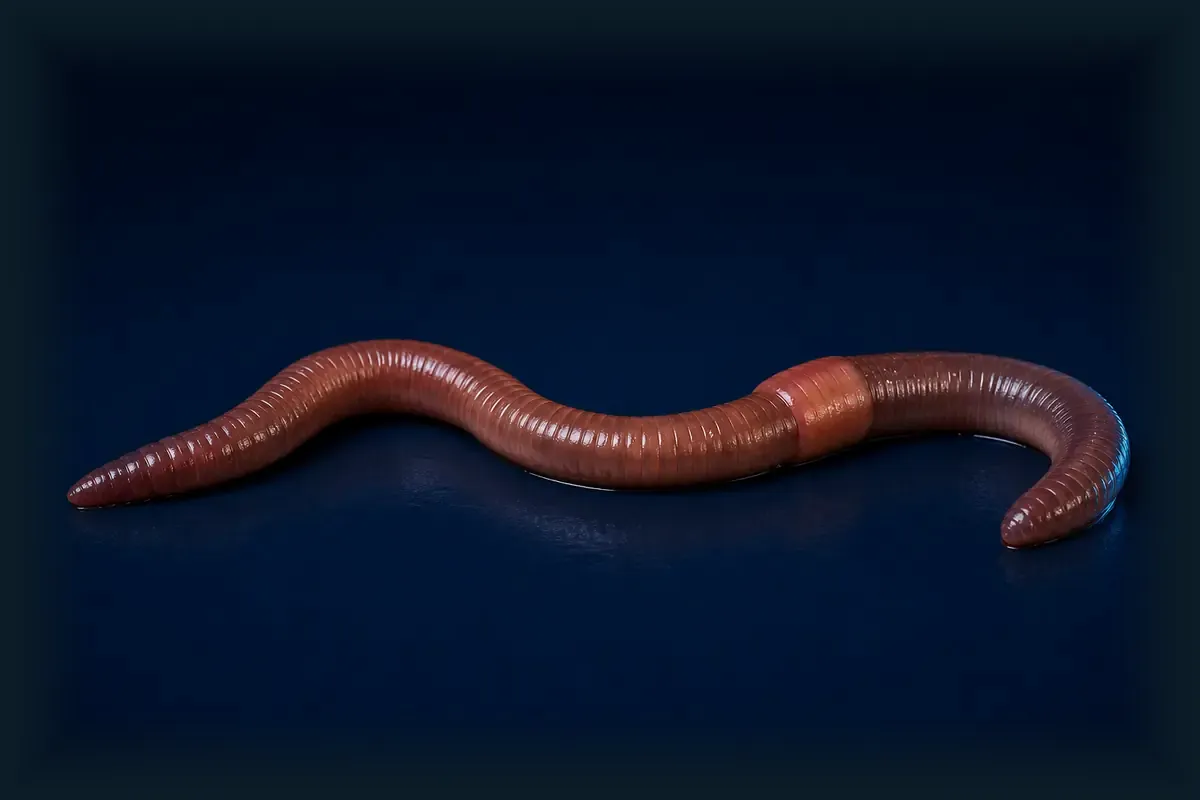
Nightcrawler worked slowly on the bottom
Strong guidanceA plain nightcrawler, no blade, moved slowly along the bottom.
Live baitOpen water
Rules and fish care
- Live bait · check local rules · never dump or move bait
- Never tip unused bait, baitfish or bait-bucket water into any water. Never carry bait, water or live catch from one water to another. It spreads invasive species and disease, and it may be against the law. Bin unused bait and follow your local disposal rules.
- If a walleye is hooked deep — in the throat, the gills or the gut — cut the line close instead of pulling the hook out. It is the better bet, not a guarantee.
- Walleye have sharp teeth and sharp gill-plate edges. Use pliers, forceps or cutters to unhook one, and keep treble hooks clear of your fingers, legs and clothes when you cast and when you land a fish.
- Planning to release? Artificial or unbaited lures are the safer choice for the fish. It is a preference, never a promise.
How-to details and their source links stay hidden until you accept the local-rules and ice warning. Read and accept the notice.
WhenTry it in late spring and summer.
HowTry moving it slowly along the bottom, and keep it near structure.
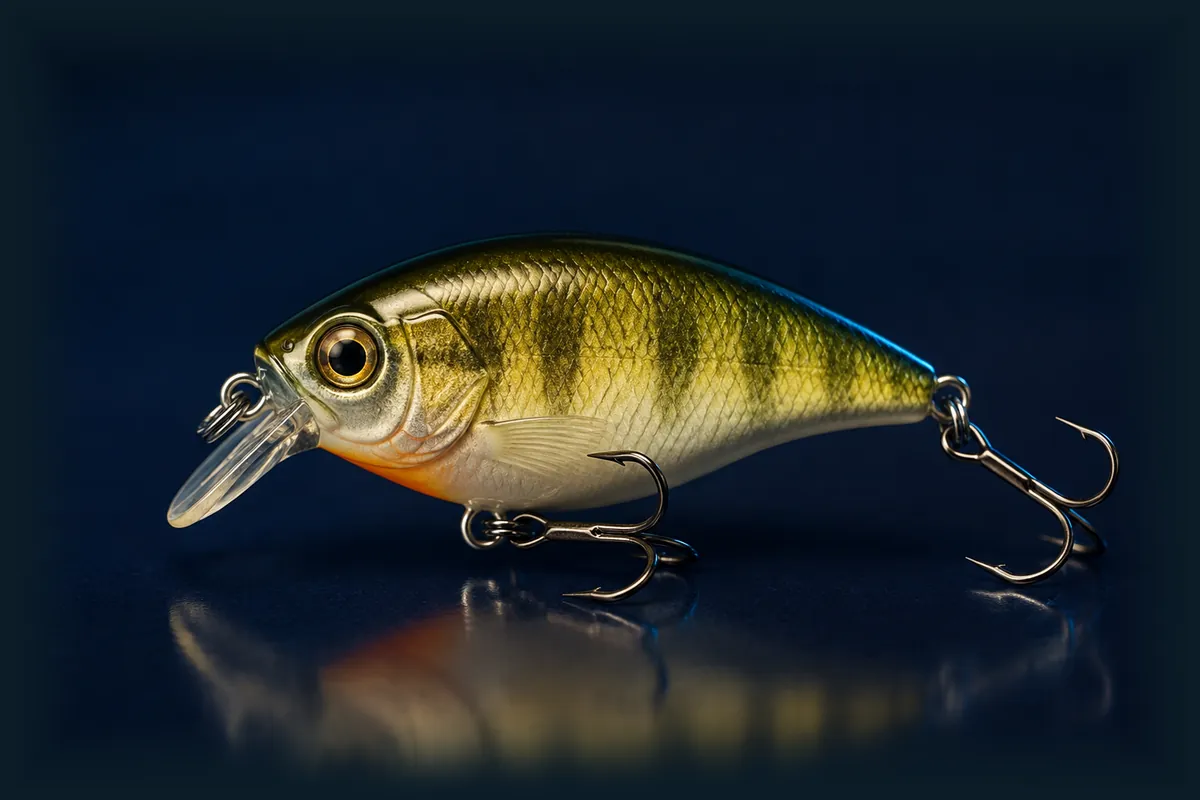
Crankbait
Strong guidanceA diving plug with a lip that wobbles as you pull it.
TrollingMultiple hooks possibleOpen water
Rules and fish care
- Trolling · check local rules
- Hooks · check local rules
- Walleye have sharp teeth and sharp gill-plate edges. Use pliers, forceps or cutters to unhook one, and keep treble hooks clear of your fingers, legs and clothes when you cast and when you land a fish.
- Planning to release? Artificial or unbaited lures are the safer choice for the fish. It is a preference, never a promise.
WhenTry it as the water warms, cast or trolled, to cover water.
HowTry casting and retrieving it, or trolling it behind a slow-moving boat, so the lip keeps it wobbling.
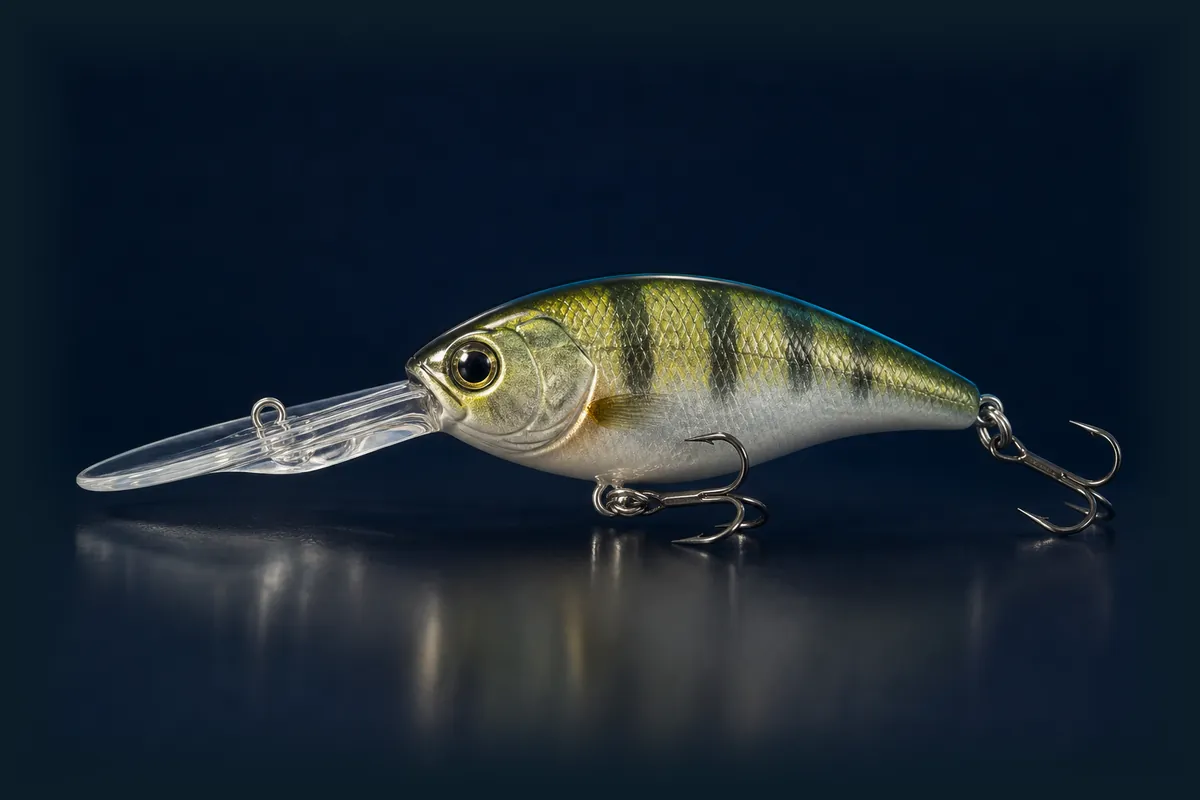
Deep-diving crankbait
Strong guidanceA crankbait with a long lip that runs deeper.
TrollingMultiple hooks possibleOpen water
Rules and fish care
- Trolling · check local rules
- Hooks · check local rules
- Walleye have sharp teeth and sharp gill-plate edges. Use pliers, forceps or cutters to unhook one, and keep treble hooks clear of your fingers, legs and clothes when you cast and when you land a fish.
- Planning to release? Artificial or unbaited lures are the safer choice for the fish. It is a preference, never a promise.
WhenTry it in summer when the fish are holding deep.
HowTry trolling it and let the long lip carry it down to the deeper fish.
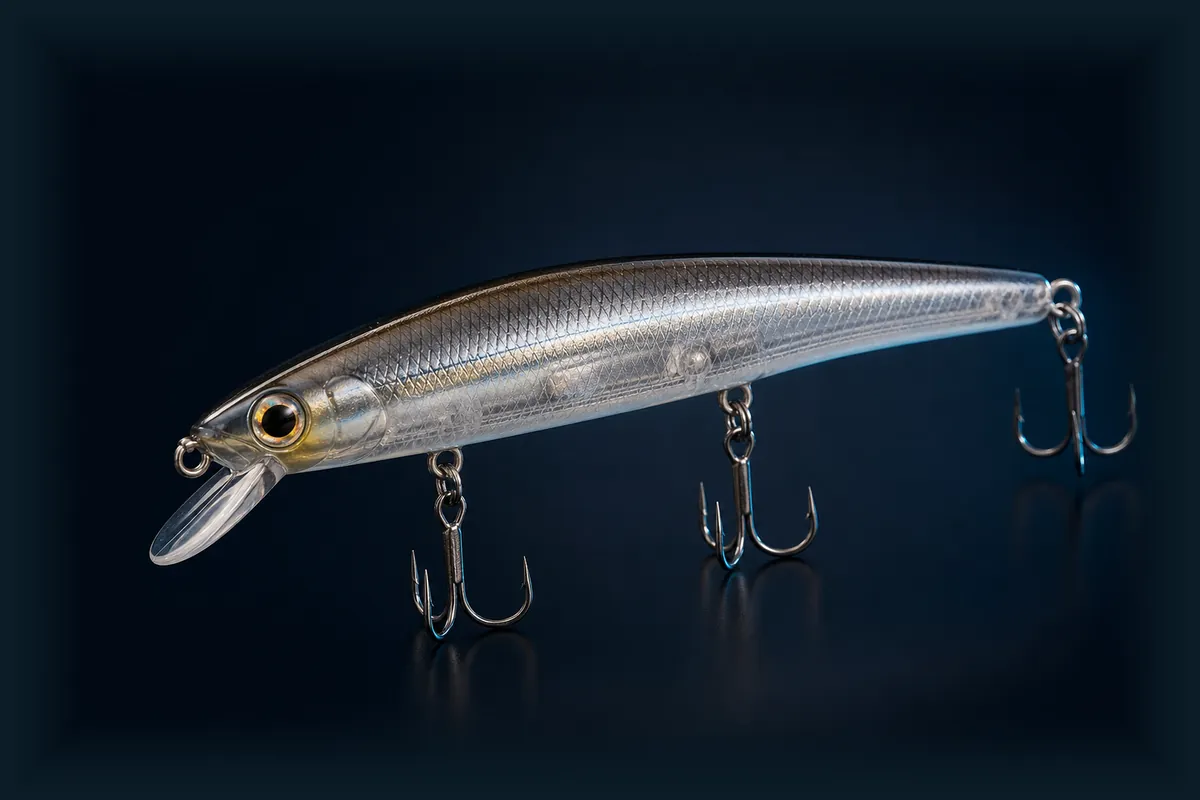
Minnow plug
Strong guidanceA slim minnow-shaped plug with a subtle roll.
Multiple hooks possibleOpen water
Rules and fish care
- Hooks · check local rules
- Walleye have sharp teeth and sharp gill-plate edges. Use pliers, forceps or cutters to unhook one, and keep treble hooks clear of your fingers, legs and clothes when you cast and when you land a fish.
- Planning to release? Artificial or unbaited lures are the safer choice for the fish. It is a preference, never a promise.
WhenTry it in cold water, and when the walleye are eating minnows or shiners.
HowTry a slow, steady retrieve so it rolls and swims like a minnow.
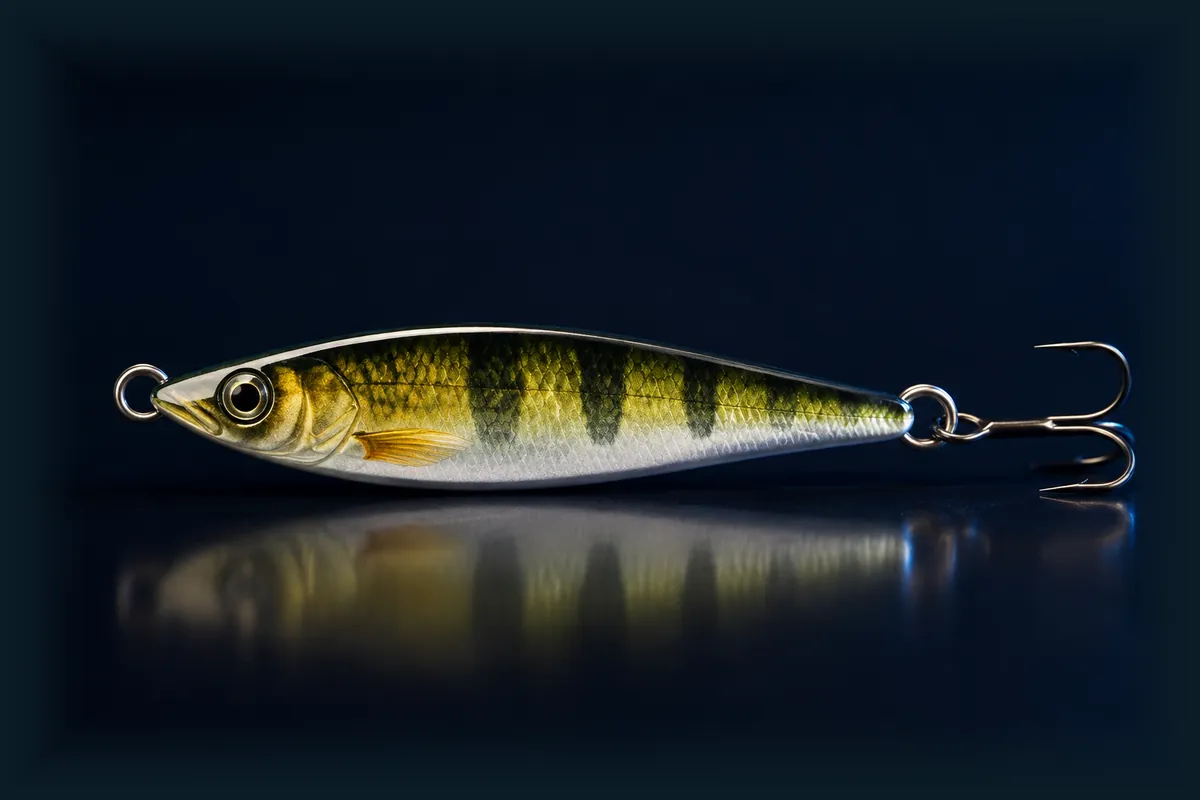
Jigging spoon
Strong guidanceA heavy metal spoon you lift and drop straight down.
Multiple hooks possibleOpen water
Rules and fish care
- Hooks · check local rules
- Walleye have sharp teeth and sharp gill-plate edges. Use pliers, forceps or cutters to unhook one, and keep treble hooks clear of your fingers, legs and clothes when you cast and when you land a fish.
- Planning to release? Artificial or unbaited lures are the safer choice for the fish. It is a preference, never a promise.
WhenTry it in summer over deep fish, worked straight up and down.
HowTry lifting it and letting it fall straight back down, over the deeper fish.
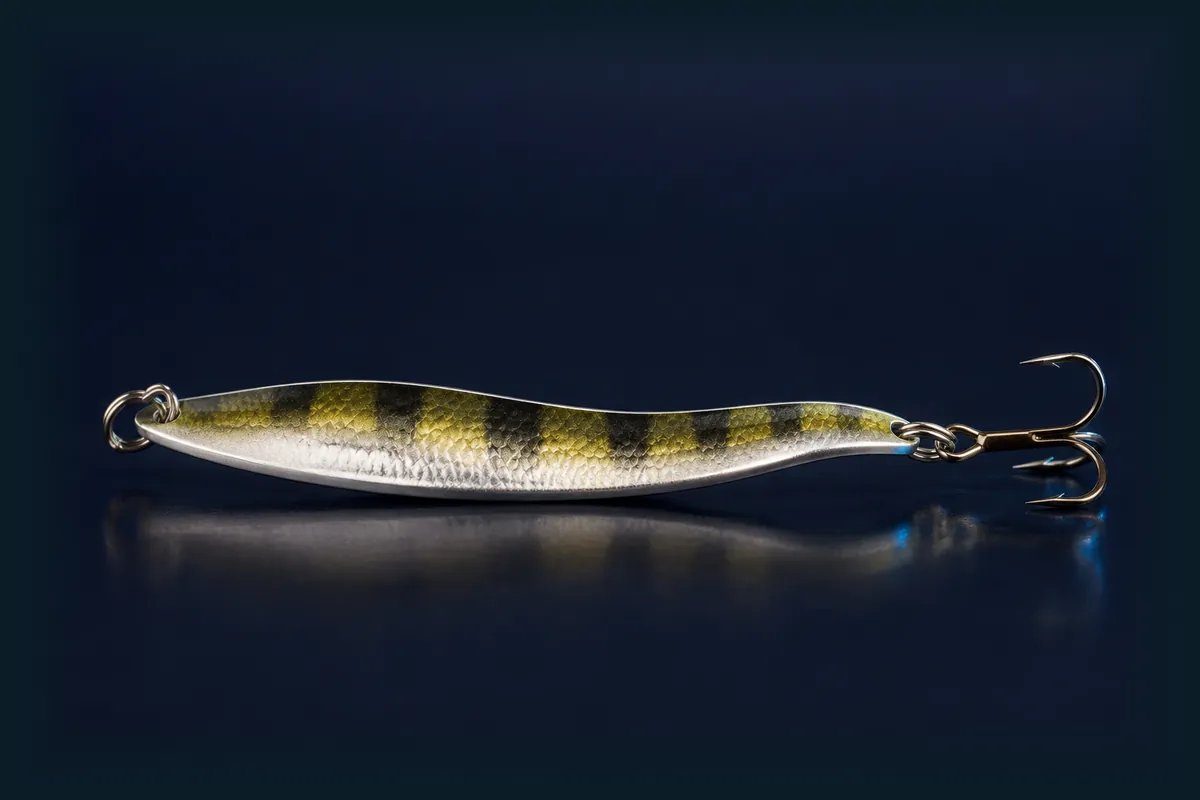
Trolling spoon
Strong guidanceA thin spoon that wobbles behind a moving boat.
TrollingMultiple hooks possibleOpen waterBoat only
Rules and fish care
- Trolling · check local rules
- Hooks · check local rules
- Walleye have sharp teeth and sharp gill-plate edges. Use pliers, forceps or cutters to unhook one, and keep treble hooks clear of your fingers, legs and clothes when you cast and when you land a fish.
- Planning to release? Artificial or unbaited lures are the safer choice for the fish. It is a preference, never a promise.
WhenTry it trolling open water from a boat, on big water.
HowTry trolling it behind the boat to cover water until you find fish.
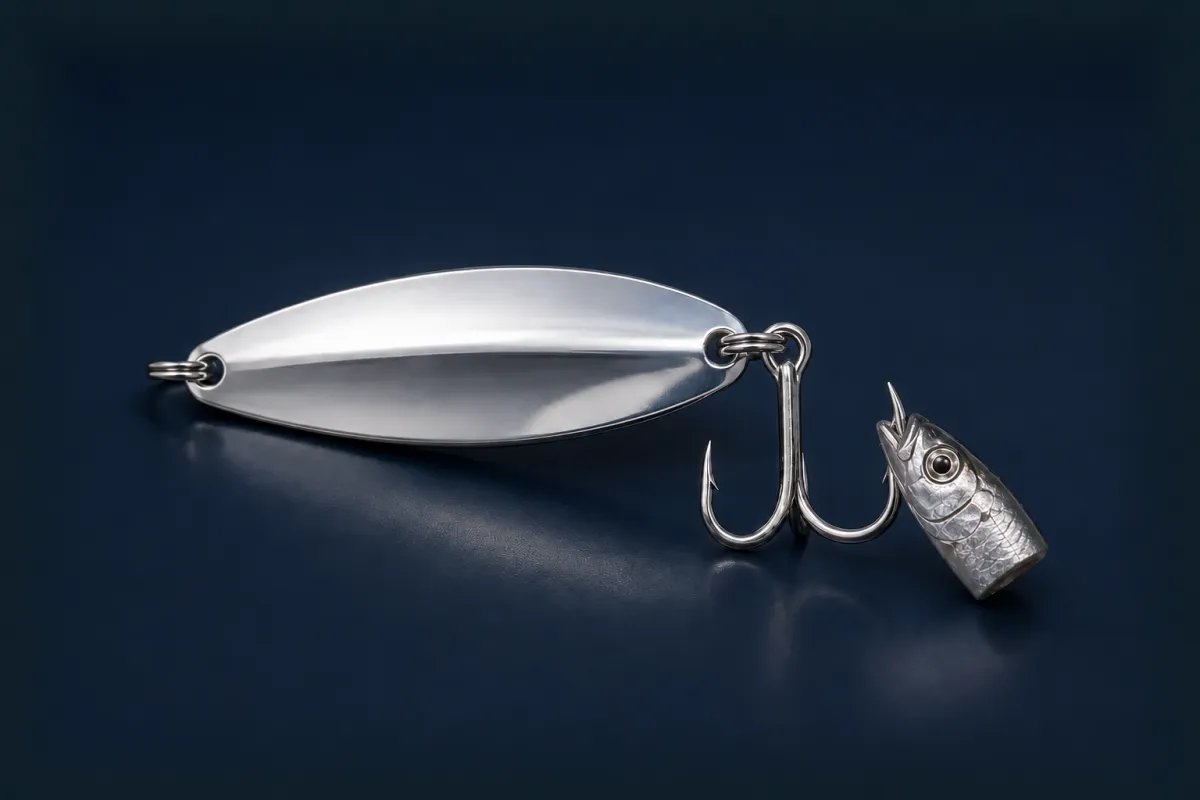
Jigging spoon tipped with a minnow head
Strong guidanceA small jigging spoon with a minnow head on the hook.
Live baitMultiple hooks possibleIce only
Rules and fish care
- Live bait · check local rules · never dump or move bait
- Never tip unused bait, baitfish or bait-bucket water into any water. Never carry bait, water or live catch from one water to another. It spreads invasive species and disease, and it may be against the law. Bin unused bait and follow your local disposal rules.
- If a walleye is hooked deep — in the throat, the gills or the gut — cut the line close instead of pulling the hook out. It is the better bet, not a guarantee.
- Hooks · check local rules
- No ice is ever completely safe. PrimeBite cannot tell you whether the ice where you are is safe. Follow your local ice guidance before you go out.
- Walleye have sharp teeth and sharp gill-plate edges. Use pliers, forceps or cutters to unhook one, and keep treble hooks clear of your fingers, legs and clothes when you cast and when you land a fish.
- Planning to release? Artificial or unbaited lures are the safer choice for the fish. It is a preference, never a promise.
How-to details and their source links stay hidden until you accept the local-rules and ice warning. Read and accept the notice.
WhenTry it through the ice, jigged close to the bottom.
HowTry short lifts and drops, and keep it close to the bottom.
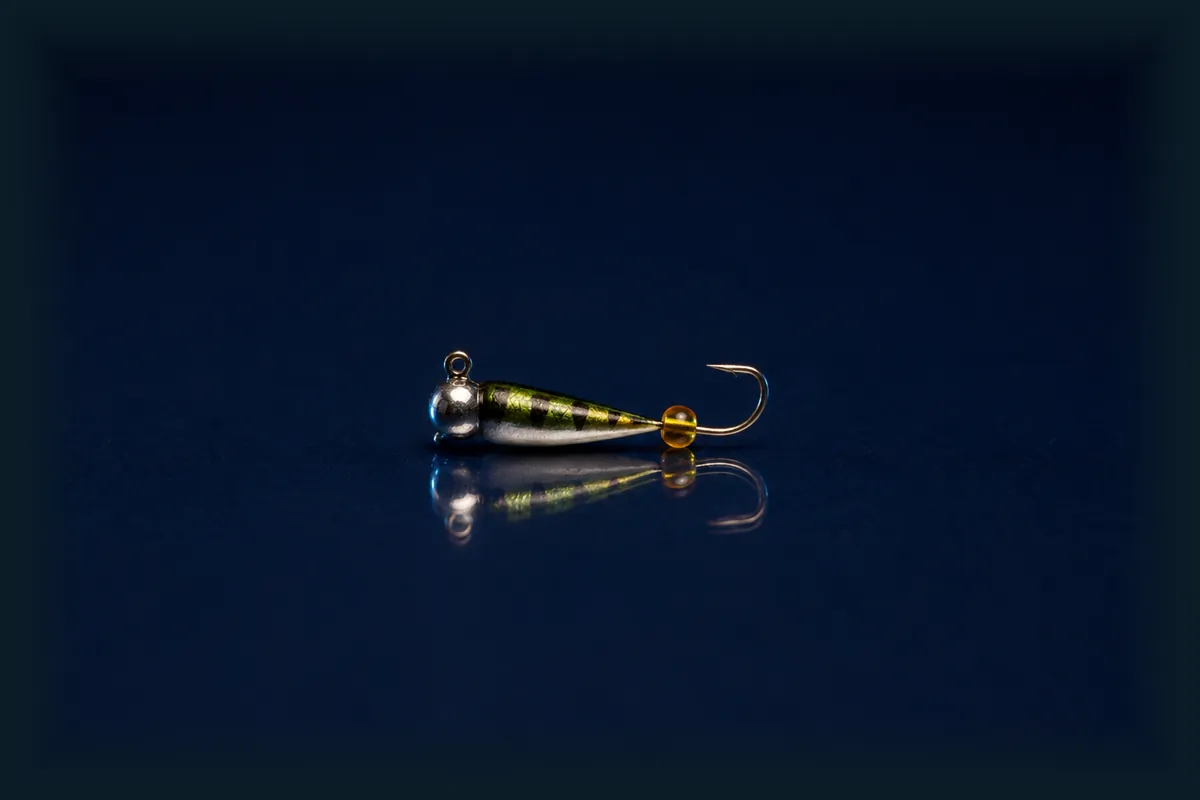
Ice jig
Strong guidanceA small jig fished through the hole.
Ice only
Rules and fish care
- No ice is ever completely safe. PrimeBite cannot tell you whether the ice where you are is safe. Follow your local ice guidance before you go out.
- Walleye have sharp teeth and sharp gill-plate edges. Use pliers, forceps or cutters to unhook one, and keep treble hooks clear of your fingers, legs and clothes when you cast and when you land a fish.
- Planning to release? Artificial or unbaited lures are the safer choice for the fish. It is a preference, never a promise.
How-to details and their source links stay hidden until you accept the local-rules and ice warning. Read and accept the notice.
WhenTry it close to the bottom.
HowTry working it gently in one spot, close to the bottom.
Ice-use limit: This Walleye profile gives general near-bottom advice. It does not set a fixed bait height for ice fishing.
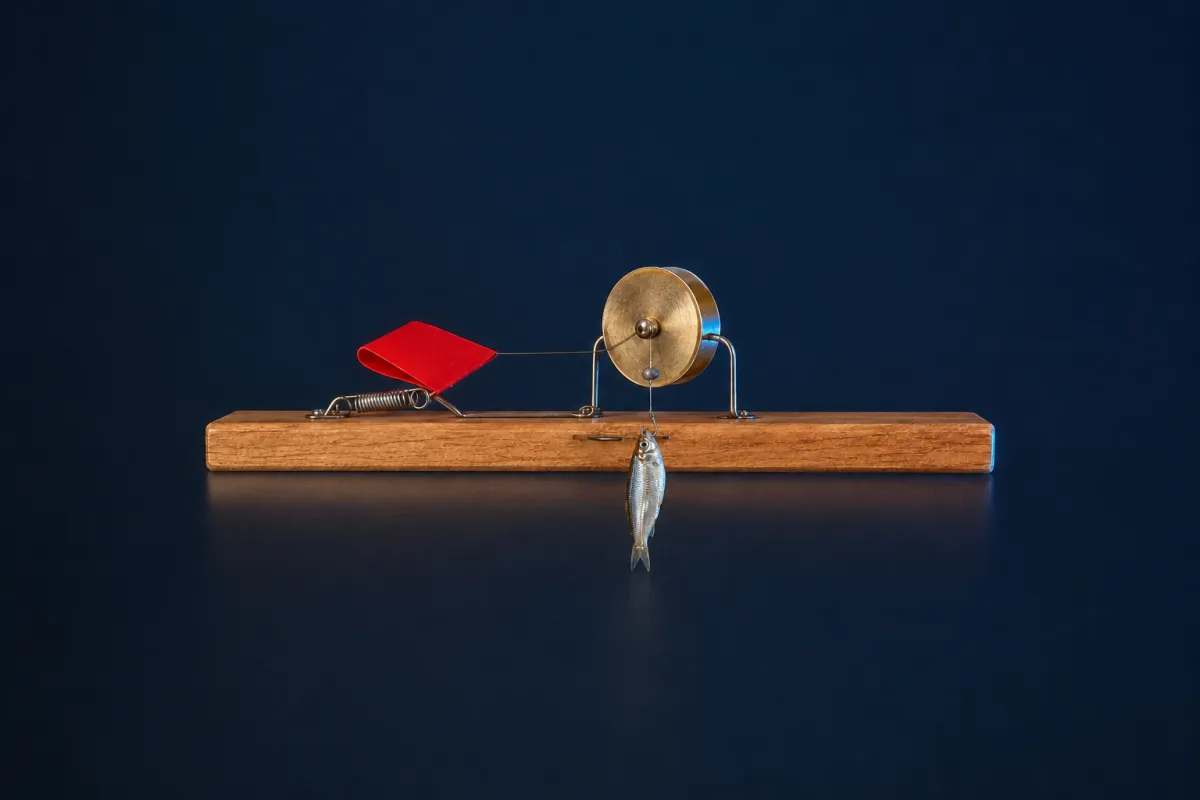
Tip-up with a minnow
Strong guidanceA flag rig that sits over the hole with a live minnow below.
Live baitMultiple hooks possibleIce only
Rules and fish care
- Live bait · check local rules · never dump or move bait
- Never tip unused bait, baitfish or bait-bucket water into any water. Never carry bait, water or live catch from one water to another. It spreads invasive species and disease, and it may be against the law. Bin unused bait and follow your local disposal rules.
- If a walleye is hooked deep — in the throat, the gills or the gut — cut the line close instead of pulling the hook out. It is the better bet, not a guarantee.
- Hooks · check local rules
- No ice is ever completely safe. PrimeBite cannot tell you whether the ice where you are is safe. Follow your local ice guidance before you go out.
- Do not let a walleye swallow the bait. On a tip-up that means checking the flag often, rather than letting a run go.
- Walleye have sharp teeth and sharp gill-plate edges. Use pliers, forceps or cutters to unhook one, and keep treble hooks clear of your fingers, legs and clothes when you cast and when you land a fish.
- Planning to release? Artificial or unbaited lures are the safer choice for the fish. It is a preference, never a promise.
How-to details and their source links stay hidden until you accept the local-rules and ice warning. Read and accept the notice.
WhenTry a 3 to 4 inch minnow. Check the flag often, and do not let a fish swallow the bait.
HowTry setting the minnow close to the bottom and letting it swim on its own.
RigTry checking the flag often so a fish does not swallow the bait.
Exact source library
All 77 included excerpts, pages, citations, and limits.
Research about fish behavior stays separate from instructional guidance. Brand names may appear inside an attributed quote; no brand paid for placement.
Measured fish research1 exact excerpt
This layer describes fish behavior. It does not choose or rank a bait.
W-R01Lester 2004 Walleye Light TemperaturePeer-Reviewed Research Paper · Walleye Adult And Subadult · 588
Lester, N. P., Dextrase, A. J., Kushneriuk, R. S., Rawson, M. R., and Ryan, P. A. 2004. Light and Temperature: Key Factors Affecting Walleye Abundance and Production. Transactions of the American Fisheries Society 133:588–605.
“In clear lakes, adult and subadult walleye are primarily crepuscular or nocturnal feeders, but in turbid environments they may be diurnal predators”
Honest limit: This paper summarizes feeding patterns in clear and cloudy water. It does not test which bait should rank first today.
The saved source-graph manifest explicitly records doi_or_url as null. The selected extraction has no source_url, url, or doi field. The Track B URL manifest has no Lester entry; the Track A download manifest names Lester only as already owned, without a source URL. No URL was inferred from the citation or searched online.
Bait and presentation guidance45 exact excerpts
Agency and guide material supports broad fishing starting points, not catch promises.
W-01Montana FWP Welcome To Walleye FishingAgency Fishing Guide · Walleye · 3
Henckel, Mark. Welcome To Walleye Fishing. Montana Outdoors, May-June 2011, pp. 10-17. Montana Fish, Wildlife & Parks.
“At night, on cloudy days, and during low-light periods of dawn and dusk, walleyes move shallower and become more active.”
Honest limit: One state agency, describing where walleye go — not whether they bite. Low light is a depth clue, not a promise.
Open source document ↗W-02WIDNR Walleye Species ProfileAgency Fishing Guide · Walleye · p. 2
Mecozzi, Maureen. Wisconsin Department of Natural Resources, Bureau of Fisheries Management. "Walleye (Stizostedion vitreum vitreum)." PUBL-FM-708 08, July 2008.
“The fish may be active in the daytime if the water is muddy or the sky is cloudy.”
Honest limit: The word is "may." Mud or cloud can open the day. Neither one promises it.
Open source document ↗W-03SEPAQ ABCs Of Walleye FishingAgency Fishing Guide · Walleye · 5
Sépaq. The ABCs of Walleye Fishing. 2022. Credits: Émile David, Beside, Government of Canada.
“In sufficiently murky settings, it can feed all day long.”
Honest limit: "Sufficiently murky" has no number behind it. That is why the app asks you how the water looks instead of guessing.
Open source document ↗W-04Ohio DNR Lake Erie Fishing GuideAgency Fishing Guide · Walleye · 5
Ohio Department of Natural Resources, Division of Wildlife. Lake Erie Fishing Guide. Publication 5276 R1221, modified January 3, 2022.
“Fishing for walleye is often best at dawn, dusk, or on overcast days with a light chop.”
Honest limit: Lake Erie guidance, and it says "often." Big-water advice does not automatically fit a small lake.
Open source document ↗W-05Montana FWP Welcome To Walleye FishingAgency Fishing Guide · Walleye · 3
Henckel, Mark. Welcome To Walleye Fishing. Montana Outdoors, May-June 2011, pp. 10-17. Montana Fish, Wildlife & Parks.
“A 'walleye chop' is when enough wind creates waves that diffuse light entering the water, allowing walleyes to move shallower.”
Honest limit: This explains what a walleye chop is. The app cannot see chop, so this stays a sentence you read, never a number in the ranking.
Open source document ↗W-06SEPAQ ABCs Of Walleye FishingAgency Fishing Guide · Walleye · 9
Sépaq. The ABCs of Walleye Fishing. 2022. Credits: Émile David, Beside, Government of Canada.
“Use bright colours when the water is cloudy, and natural colours when the water is clear.”
Honest limit: A starting direction from one guide. It names no best colour, and neither do we.
Open source document ↗W-07South Dakota GFP Going Fishing Guide Part OneAgency Fishing Guide · Generic Freshwater · PDF p. 22; guide p. 23
South Dakota Game, Fish and Parks. Going Fishing. Authors Larry Pape and Lindsey Chizinski; revised by Maggie Lindsey, Laurie Root, Geno Adams and Jason Jungwirth.
“When fishing in clear water, use lures that mimic natural colors (like silver and whites).”
Honest limit: Silver and white are examples, not a rule. This guide is about fishing in general, not about walleye.
Open source document ↗W-08South Dakota GFP Going Fishing Guide Part OneAgency Fishing Guide · Generic Freshwater · PDF p. 11; guide p. 11
South Dakota Game, Fish and Parks. Going Fishing. Authors Larry Pape and Lindsey Chizinski; revised by Maggie Lindsey, Laurie Root, Geno Adams and Jason Jungwirth.
“In murky water, brightly-colored lures can be a good choice.”
Honest limit: "Can be a good choice" is as far as this source goes. Bright is a place to start, not a fix.
Open source document ↗W-09South Dakota GFP Going Fishing Guide Part OneAgency Fishing Guide · Generic Freshwater · PDF p. 22; guide p. 23
South Dakota Game, Fish and Parks. Going Fishing. Authors Larry Pape and Lindsey Chizinski; revised by Maggie Lindsey, Laurie Root, Geno Adams and Jason Jungwirth.
“Lures that make noise are popular for deep-water fishing or when fishing in the dark, situations where fish rely on senses other than sight to find food.”
Honest limit: General fishing advice about noisy lures, not a walleye test. "Popular" describes anglers, not results.
Open source document ↗W-10Montana FWP Welcome To Walleye FishingAgency Fishing Guide · Walleye · 2
Henckel, Mark. Welcome To Walleye Fishing. Montana Outdoors, May-June 2011, pp. 10-17. Montana Fish, Wildlife & Parks.
“Jigs typically works best in cold water. Walleyes are sluggish then and won't chase fast-moving baits.”
Honest limit: One agency guide, about cold water only. The word is "typically," not always.
Open source document ↗W-11WIDNR Walleye Species ProfileAgency Fishing Guide · Walleye · p. 3
Mecozzi, Maureen. Wisconsin Department of Natural Resources, Bureau of Fisheries Management. "Walleye (Stizostedion vitreum vitreum)." PUBL-FM-708 08, July 2008.
This excerpt supports guarded live-bait or ice instructions. Read and accept the safety notice to reveal the exact excerpt and its limit.
“Keep the lure or bait near the bottom and reel it in slowly”
Honest limit: This Walleye profile gives general near-bottom advice. It does not set a fixed bait height for ice fishing.
Open source document ↗W-12Montana FWP Welcome To Walleye FishingAgency Fishing Guide · Walleye · 2
Henckel, Mark. Welcome To Walleye Fishing. Montana Outdoors, May-June 2011, pp. 10-17. Montana Fish, Wildlife & Parks.
This excerpt supports guarded live-bait or ice instructions. Read and accept the safety notice to reveal the exact excerpt and its limit.
“As waters warm and walleyes become more active, boat anglers switch to 'crawler harnesses and trolled crankbaits.”
Honest limit: This describes what boat anglers switch to. It is a habit anglers have, not a measured result.
Open source document ↗W-13Virginia DWR 2026 Walleye Fishing ForecastAgency Fishing Guide · Walleye · 15
Virginia Department of Wildlife Resources. 2026. 2026 Walleye Fishing Forecast.
“As water temperatures increase throughout the summer, Walleye continue to move deeper seeking cooler water.”
Honest limit: Fish move deeper as summer warms. How deep changes by lake, so we ship no depth number and no temperature cut-off.
Open source document ↗W-14Virginia DWR 2026 Walleye Fishing ForecastAgency Fishing Guide · Walleye · 15
Virginia Department of Wildlife Resources. 2026. 2026 Walleye Fishing Forecast.
“Anglers must fish deeper throughout the summer using vertical jigging techniques or fish at night”
Honest limit: The source says "must." We do not. Deeper, or after dark, is a starting point to try.
Open source document ↗W-46NYDEC Susquehanna River Fishing BrochureAgency Fishing Guide · Walleye · p. 1
New York State Department of Environmental Conservation. Fishing the Susquehanna River: Tioga, Broome and Chenango Counties. PDF metadata: created January 26, 2005; modified June 16, 2020.
This excerpt supports guarded live-bait or ice instructions. Read and accept the safety notice to reveal the exact excerpt and its limit.
“The most productive bait for river walleye is a jig tipped with a minnow,”
Honest limit: One state brochure about one river. "Most productive" is that brochure's wording, not a promise for other waters.
Open source document ↗W-15SEPAQ ABCs Of Walleye FishingAgency Fishing Guide · Walleye · 10
Sépaq. The ABCs of Walleye Fishing. 2022. Credits: Émile David, Beside, Government of Canada.
“Artificial fish normally range in size from 3 to 3½ inches (7.5 to 9 cm) or 4 to 5 inches (10 to 12 cm) for large walleye fishing.”
Honest limit: A size range from one guide. It says what to tie on, not that it catches more.
Open source document ↗W-16Ohio DNR Lake Erie Fishing GuideAgency Fishing Guide · Walleye · 10
Ohio Department of Natural Resources, Division of Wildlife. Lake Erie Fishing Guide. Publication 5276 R1221, modified January 3, 2022.
This excerpt supports guarded live-bait or ice instructions. Read and accept the safety notice to reveal the exact excerpt and its limit.
“anglers troll or cast worm harnesses.”
Honest limit: This Lake Erie guide describes casting or trolling a worm harness. It does not prove today's rank.
Open source document ↗W-17South Dakota GFP Going Fishing Guide Part OneAgency Fishing Guide · Generic Freshwater · PDF p. 11; guide p. 11
South Dakota Game, Fish and Parks. Going Fishing. Authors Larry Pape and Lindsey Chizinski; revised by Maggie Lindsey, Laurie Root, Geno Adams and Jason Jungwirth.
“the spinning motion of the blade creates sounds and vibrations that attract fish.”
Honest limit: This is about spinner blades in general, not about walleye. A harness carries the same kind of blade.
Open source document ↗W-18Virginia DWR 2026 Walleye Fishing ForecastAgency Fishing Guide · Walleye · 15
Virginia Department of Wildlife Resources. 2026. 2026 Walleye Fishing Forecast.
This excerpt supports guarded live-bait or ice instructions. Read and accept the safety notice to reveal the exact excerpt and its limit.
“Walleye move into deeper water and are caught on nightcrawler harnesses and plugs trolled in deeper water using bottom bouncers”
Honest limit: One state's summer report. It names the rig, not how often it works.
Open source document ↗W-19Montana FWP Welcome To Walleye FishingAgency Fishing Guide · Walleye · 2
Henckel, Mark. Welcome To Walleye Fishing. Montana Outdoors, May-June 2011, pp. 10-17. Montana Fish, Wildlife & Parks.
This excerpt supports guarded live-bait or ice instructions. Read and accept the safety notice to reveal the exact excerpt and its limit.
“the sinker skips across the bottom while the 'crawler harness rides up”
Honest limit: This describes how the rig moves, not a fixed bait height or proof it catches more.
Open source document ↗W-20Georgia DNR Anglers Guide Walleye Fishing GeorgiaAgency Fishing Guide · Walleye · 5
Georgia Department of Natural Resources, Wildlife Resources Division, Fisheries Management Section. February 2018. Angler's Guide to Walleye Fishing in Georgia.
This excerpt supports guarded live-bait or ice instructions. Read and accept the safety notice to reveal the exact excerpt and its limit.
“The best presentation for walleye in the late-spring and summer months is a simple nightcrawler that is worked slowly along the bottom near structure.”
Honest limit: The source says "best presentation." We will not. Our word stays "try," and this is late-spring and summer guidance only.
Open source document ↗W-21Montana FWP Welcome To Walleye FishingAgency Fishing Guide · Walleye · 2
Henckel, Mark. Welcome To Walleye Fishing. Montana Outdoors, May-June 2011, pp. 10-17. Montana Fish, Wildlife & Parks.
“A plastic lip on most models takes the lure to deeper water and makes it wobble to attract fish.”
Honest limit: This describes what a diving lip does. Lure mechanics, not a catch claim.
Open source document ↗W-22NYDEC Walleye Fact Sheet Lake Ronkonkoma Fort PondAgency Fishing Guide · Walleye · 2
New York State Department of Environmental Conservation, Long Island Freshwater Fisheries Management Unit. Lake Ronkonkoma and Fort Pond Walleye Stocking Program Fact Sheet. CAG/FGH 01/01.
“Swimming plugs that imitate the forage fish available are especially effective”
Honest limit: "Especially effective" is the source's phrase, not ours. It also leans on knowing the local forage, which most anglers do not.
Open source document ↗W-23Virginia DWR 2026 Walleye Fishing ForecastAgency Fishing Guide · Walleye · 3
Virginia Department of Wildlife Resources. 2026. 2026 Walleye Fishing Forecast.
This excerpt supports guarded live-bait or ice instructions. Read and accept the safety notice to reveal the exact excerpt and its limit.
“When Walleyes move deeper during the summer months, successful anglers troll crawler harnesses on lead core line or use jigging spoons to reach the depths.”
Honest limit: One state's summer advice. Lead core is a rig detail we do not ship, and "successful anglers" is not a measurement.
Open source document ↗W-24Ohio DNR Lake Erie Fishing GuideAgency Fishing Guide · Walleye · 5
Ohio Department of Natural Resources, Division of Wildlife. Lake Erie Fishing Guide. Publication 5276 R1221, modified January 3, 2022.
This excerpt supports guarded live-bait or ice instructions. Read and accept the safety notice to reveal the exact excerpt and its limit.
“Common trolling lures include diving plugs, bottom bouncers, crawler harnesses, or spoons.”
Honest limit: A list of what is common, not a ranking. Trolling is restricted on some waters, so this carries the local-rules warning.
Open source document ↗W-25Minnesota DNR Tackling Your Tackle BoxAgency Fishing Guide · Walleye · PDF p. 34; lesson p. 5:4-30
Minnesota DNR MinnAqua Program. 2010. MinnAqua Fishing: Get in the Habitat! Chapter 5, Lesson 4: Tackling Your Tackle Box.
This excerpt supports guarded live-bait or ice instructions. Read and accept the safety notice to reveal the exact excerpt and its limit.
“Live bait: Nightcrawlers, leeches, 2- to 4-inch minnows”
Honest limit: A size list from a teaching guide. It names leeches too, which we hold back over release-survival risk.
Open source document ↗W-26NJDEP Focus On Fishing WalleyeAgency Fishing Guide · Walleye · p. 40 (PDF p. 1)
New Jersey Department of Environmental Protection, Division of Fish and Wildlife. "Focus on Fishing: Guidelines for Success: Walleye." 2007 Freshwater Fishing Issue, Vol. 20, No. 2, January 2007, p. 40.
“They are found near the bottom, in and around structure”
Honest limit: Habitat, not bait. It tells you where to put a bait, never which one to use.
Open source document ↗W-27Northern Tier Fishing By Canoe Nature GuideNon-Agency Guide Book · Walleye · PDF p. 4 / book p. 2
Cary, Bob. Tips on Fishing By Canoe & Canoe Country Nature Book. Northern Tier High Adventure, Boy Scouts of America, Ely, Minnesota, 2009.
“Choice walleye spots are the edges of rock piles, ledges and reefs”
Honest limit: A guide book, not an agency. Useful for where to look, weaker as proof.
Open source document ↗W-28Northern Tier Fishing By Canoe Nature GuideNon-Agency Guide Book · Walleye · PDF p. 33 / book p. 31
Cary, Bob. Tips on Fishing By Canoe & Canoe Country Nature Book. Northern Tier High Adventure, Boy Scouts of America, Ely, Minnesota, 2009.
“They are found around weed beds, rock piles and where streams enter or leave lakes.”
Honest limit: Same guide book, a different page. It lists places with no ranking between them. This is the only receipt the Weed edge chip has.
Open source document ↗W-29NYDEC Susquehanna River Fishing BrochureAgency Fishing Guide · Walleye · p. 1
New York State Department of Environmental Conservation. Fishing the Susquehanna River: Tioga, Broome and Chenango Counties. PDF metadata: created January 26, 2005; modified June 16, 2020.
“Walleye tend to hold in deep pools and backwater areas next to current break, or around log jams.”
Honest limit: River guidance from one river system. The brochure mentions spring and autumn fishing, but this habitat sentence does not establish a measured fall-specific effect.
Open source document ↗W-30Montana FWP Welcome To Walleye FishingAgency Fishing Guide · Walleye · 3
Henckel, Mark. Welcome To Walleye Fishing. Montana Outdoors, May-June 2011, pp. 10-17. Montana Fish, Wildlife & Parks.
“I target current breaks, seams, and eddies or slack water behind boulders and submerged logs adjacent to current.”
Honest limit: An angler quoted inside a state magazine. Good field sense, not a study.
Open source document ↗W-31NJDEP Focus On Fishing WalleyeAgency Fishing Guide · Walleye · p. 40 (PDF p. 1)
New Jersey Department of Environmental Protection, Division of Fish and Wildlife. "Focus on Fishing: Guidelines for Success: Walleye." 2007 Freshwater Fishing Issue, Vol. 20, No. 2, January 2007, p. 40.
“In river systems, walleye reside below dams and islands, and at the mouths of tributaries during the late winter to early spring.”
Honest limit: This names late winter to early spring only. Do not read it as a year-round river rule. Dam water can rise without warning, so the safety line rides with it.
Open source document ↗W-32Ohio DNR Lake Erie Fishing GuideAgency Fishing Guide · Walleye · 5
Ohio Department of Natural Resources, Division of Wildlife. Lake Erie Fishing Guide. Publication 5276 R1221, modified January 3, 2022.
“For shore anglers, the best opportunities are dawn and dusk near accessible river mouths”
Honest limit: Lake Erie shore advice. It pairs a place with a time and promises neither. The library uses this same line under two items — it stays one card.
Open source document ↗W-33Montana FWP Welcome To Walleye FishingAgency Fishing Guide · Walleye · 3
Henckel, Mark. Welcome To Walleye Fishing. Montana Outdoors, May-June 2011, pp. 10-17. Montana Fish, Wildlife & Parks.
“His best fishing has been off points or other places where shallow water is close to deep water.”
Honest limit: One angler's best spots, in one state. Shallow-next-to-deep is a search idea, not a rule.
Open source document ↗W-34Ohio DNR Lake Erie Fishing GuideAgency Fishing Guide · Walleye · 5
Ohio Department of Natural Resources, Division of Wildlife. Lake Erie Fishing Guide. Publication 5276 R1221, modified January 3, 2022.
“If you are unsure where the walleye are located, trolling is the easiest way to cover a lot of water to find the fish.”
Honest limit: Covering water is a search argument. It is not proof that trolling catches more fish.
Open source document ↗W-35Ohio DNR Lake Erie Fishing GuideAgency Fishing Guide · Walleye · 5
Ohio Department of Natural Resources, Division of Wildlife. Lake Erie Fishing Guide. Publication 5276 R1221, modified January 3, 2022.
“Trolling can be done with planer boards, an assortment of divers, down riggers, or by simply flat-lining.”
Honest limit: A menu of big-water trolling gear. On a small lake most of it is not needed, which is why the sentence keeps the words "on big water."
Open source document ↗W-36NYDEC Walleye Fact Sheet Lake Ronkonkoma Fort PondAgency Fishing Guide · Walleye · 1
New York State Department of Environmental Conservation, Long Island Freshwater Fisheries Management Unit. Lake Ronkonkoma and Fort Pond Walleye Stocking Program Fact Sheet. CAG/FGH 01/01.
“Walleye are voracious predators that prefer spiny rayed forage fish, such as yellow perch and white perch.”
Honest limit: Diet, not tackle. It says what walleye eat where this source looked.
Open source document ↗W-37WIDNR Walleye Species ProfileAgency Fishing Guide · Walleye · p. 2
Mecozzi, Maureen. Wisconsin Department of Natural Resources, Bureau of Fisheries Management. "Walleye (Stizostedion vitreum vitreum)." PUBL-FM-708 08, July 2008.
“Bullheads, freshwater drum, yellow perch, darters and minnows are favorite walleye prey”
Honest limit: A prey list from one state. Your lake's forage can differ, and can change from year to year.
Open source document ↗W-39WIDNR Walleye Species ProfileAgency Fishing Guide · Walleye · p. 3
Mecozzi, Maureen. Wisconsin Department of Natural Resources, Bureau of Fisheries Management. "Walleye (Stizostedion vitreum vitreum)." PUBL-FM-708 08, July 2008.
This excerpt supports guarded live-bait or ice instructions. Read and accept the safety notice to reveal the exact excerpt and its limit.
“Ice fish with tip-ups or jigs.”
Honest limit: An agency profile confirms this ice-fishing method. It does not show how well it works.
Open source document ↗W-40Connecticut DEEP Walleye BrochureAgency Fishing Guide · Walleye · 1
Connecticut Department of Energy and Environmental Protection, Bureau of Natural Resources, Inland Fisheries Division. Where Can I Catch a Connecticut Walleye? Updated 12/20/2013.
This excerpt supports guarded live-bait or ice instructions. Read and accept the safety notice to reveal the exact excerpt and its limit.
“Walleye can be caught through the ice using tip-ups with shiners.”
Honest limit: One state, one sentence. It says the method works there, not how well.
Open source document ↗W-41WIDNR Fishing Walleye Through IceAgency Fishing Guide · Walleye · 1
Wisconsin Department of Natural Resources. Skip Sommerfeldt. Fishing walleye through the ice. PDF metadata creation date December 18, 2012.
This excerpt supports guarded live-bait or ice instructions. Read and accept the safety notice to reveal the exact excerpt and its limit.
“Live bait is most often used on tip-ups.”
Honest limit: "Most often" describes what people do. It does not prove live bait is safer for released fish.
Open source document ↗W-42NYDEC Introduction To Ice FishingAgency Fishing Guide · Walleye · PDF p. 5 (printed p. 79)
New York State Department of Environmental Conservation. I FISH NY Beginners' Guide to Freshwater Fishing, Chapter 9: Introduction to Ice Fishing. 2016.
This excerpt supports guarded live-bait or ice instructions. Read and accept the safety notice to reveal the exact excerpt and its limit.
“Look for walleye around points, flats and shoals.”
Honest limit: Where to drill, not what to tie on. Ice safety is a separate matter and comes first.
Open source document ↗W-43WIDNR Fishing Walleye Through IceAgency Fishing Guide · Walleye · 1
Wisconsin Department of Natural Resources. Skip Sommerfeldt. Fishing walleye through the ice. PDF metadata creation date December 18, 2012.
This excerpt supports guarded live-bait or ice instructions. Read and accept the safety notice to reveal the exact excerpt and its limit.
“Gravel bars and rocky drop-offs, weeds edges and mid-depth mud flats and break lines where gravel/sand turns to soft bottom are excellent holding locations for walleye.”
Honest limit: Bottom types from one state's ice page. The word "excellent" is theirs, not ours.
Open source document ↗W-45NYDEC Introduction To Ice FishingAgency Fishing Guide · Walleye · PDF p. 5 (printed p. 79)
New York State Department of Environmental Conservation. I FISH NY Beginners' Guide to Freshwater Fishing, Chapter 9: Introduction to Ice Fishing. 2016.
This excerpt supports guarded live-bait or ice instructions. Read and accept the safety notice to reveal the exact excerpt and its limit.
“Fishing is often best just before and after dark.”
Honest limit: "Often" is doing real work in that sentence. Fishing ice in the dark carries its own risk.
Open source document ↗W-68NYDEC Introduction To Ice FishingAgency Fishing Guide · Mixed Named Freshwater Species · PDF p. 3 (printed p. 77)
New York State Department of Environmental Conservation. I FISH NY Beginners' Guide to Freshwater Fishing, Chapter 9: Introduction to Ice Fishing. 2016.
This excerpt supports guarded live-bait or ice instructions. Read and accept the safety notice to reveal the exact excerpt and its limit.
“For walleye, pike, pickerel and lake trout (or larger trout), use jigging spoons and swimming jigs. Lures are often tipped with some form of bait. The natural baits commonly used with jigging lures are minnows, minnow heads”
Honest limit: This guide names Walleye among several ice-fishing species. It supports a minnow-head-tipped jigging lure, not today's rank.
Open source document ↗Rules, safety, and fish care31 exact excerpts
These excerpts support warnings and safer handling. PrimeBite cannot know your local law or judge safe ice.
W-47NYDEC Introduction To Ice FishingAgency Fishing Guide · Generic Freshwater · PDF p. 2 (printed p. 76)
New York State Department of Environmental Conservation. I FISH NY Beginners' Guide to Freshwater Fishing, Chapter 9: Introduction to Ice Fishing. 2016.
“Never dump unused baitfish or water from your bait bucket into a lake or pond.”
Honest limit: The plainest of the four, and it names the bucket water as well as the bait. It says nothing about carrying bait from one water to another, which is the other half of our guardrail.
Open source document ↗W-48Missouri DOC Introduction To FishingAgency Fishing Guide · Generic Freshwater · p. 23
Missouri Department of Conservation. Revised 2017. An Introduction to Fishing. FIS152.
“Do not dump your unused bait into the water. Doing so can spread invasive species.”
Honest limit: This selected quote directly gives the reason: unused bait can spread invasive species. It describes a risk, not a certainty for every bucket.
Open source document ↗W-49Ohio DNR Lake Erie Fishing GuideAgency Fishing Guide · Generic Freshwater · 24
Ohio Department of Natural Resources, Division of Wildlife. Lake Erie Fishing Guide. Publication 5276 R1221, modified January 3, 2022.
“DO NOT RELEASE ANY LIVE BAIT INTO THE WATER.”
Honest limit: Copied as printed, capitals and all. On a Lake Erie page, so the water it means is Lake Erie. Do not let the shouting make it read as national law.
Open source document ↗W-50Lake Champlain Baitfish GuideBasin-Programme Guide · Generic Freshwater · p. 35 (booklet)
Vermont Fish & Wildlife Department. 2005. Baitfish of Vermont Including Lake Champlain. Waterbury, Vermont. Printing made possible through a grant from the Lake Champlain Basin Program.
“Do not release any bait into a body of water.”
Honest limit: One lake basin's guide, and the widest wording of the four — any bait, any water.
Open source document ↗W-51Georgia DNR Anglers Guide Walleye Fishing GeorgiaAgency Fishing Guide · Walleye · 4
Georgia Department of Natural Resources, Wildlife Resources Division, Fisheries Management Section. February 2018. Angler's Guide to Walleye Fishing in Georgia.
“Use caution when fishing below dams because water levels may rise suddenly.”
Honest limit: The one clean quote behind the rising-water warning, from a walleye guide. It warns; it does not say how fast, how often, or which dams. That is the point — no number belongs here.
Open source document ↗W-52Illinois DNR Fishing The Illinois RiverAgency Fishing Guide · Generic Freshwater Navigation-Dam Safety · p. 9
Illinois Department of Natural Resources, Division of Fisheries, Streams Program. Fishing the Illinois. Revised June 1995; printed by authority of the State of Illinois, 7-00.
“avoid the areas immediately below and above navigation dams”
Honest limit: Big navigable rivers with lock-and-dam traffic, not a small mill dam.
Open source document ↗W-53Missouri DOC Introduction To FishingAgency Fishing Guide · Generic Freshwater · p. 12
Missouri Department of Conservation. Revised 2017. An Introduction to Fishing. FIS152.
“Walleye, gar, and large trout have sharp teeth that can inflict a painful wound when lipped.”
Honest limit: This is handling guidance. A deep hook still calls for the separate cut-the-line advice.
Open source document ↗W-54Missouri DOC Introduction To FishingAgency Fishing Guide · Generic Freshwater · p. 12
Missouri Department of Conservation. Revised 2017. An Introduction to Fishing. FIS152.
“White bass, striped bass, and walleye have sharp edges on their gill plates that can slice a finger.”
Honest limit: The same guide also names the gill plate specifically — the part anglers grab without thinking. "Can slice" is the honest strength.
Open source document ↗W-55Northern Tier Fishing By Canoe Nature GuideNon-Agency Guide Book · Walleye · PDF p. 32 / book p. 30
Cary, Bob. Tips on Fishing By Canoe & Canoe Country Nature Book. Northern Tier High Adventure, Boy Scouts of America, Ely, Minnesota, 2009.
“Some fish, such as the northern pike and walleye, have sharp teeth and can cause severe lacerations on fingers. A pair of pliers are indispensable in removing hooks from these toothy critters.”
Honest limit: This is handling guidance. A deep hook still calls for the separate cut-the-line advice.
Open source document ↗W-56Northern Tier Fishing By Canoe Nature GuideNon-Agency Guide Book · Generic Freshwater · PDF p. 4 / book p. 2
Cary, Bob. Tips on Fishing By Canoe & Canoe Country Nature Book. Northern Tier High Adventure, Boy Scouts of America, Ely, Minnesota, 2009.
“care must be taken when casting or landing a flopping fish to keep the hooks away from fingers, legs and clothing.”
Honest limit: This is handling guidance. A deep hook still calls for the separate cut-the-line advice.
Open source document ↗W-57Minnesota DNR Tackling Your Tackle BoxAgency Fishing Guide · Generic Freshwater · PDF p. 7; lesson p. 5:4-3
Minnesota DNR MinnAqua Program. 2010. MinnAqua Fishing: Get in the Habitat! Chapter 5, Lesson 4: Tackling Your Tackle Box.
“Use nippers or nail clippers to cut fishing line.”
Honest limit: This is handling guidance. A deep hook still calls for the separate cut-the-line advice.
Open source document ↗W-58MNDNR Hooking Mortality Live Artificial BaitAgency Research Report · Walleye · PDF p. 15 (report p. 12)
Payer, Ronald D.; Pierce, Rodney B.; Pereira, Donald L. 1987. Hooking Mortality of Walleye Caught on Live and Artificial Baits. Minnesota Department of Natural Resources, Section of Fisheries. Completion Report, Study 127, Project D-J F-26-R Minnesota.
“lethal injuries which occur when hooks are removed from vital areas can be reduced by cutting the leader”
Honest limit: This walleye report recommends leaving deep hooks in place, citing earlier brown-trout research. It did not test cutting the line against removing the hook in walleye.
Open source document ↗W-59WIDNR Walleye Species ProfileAgency Fishing Guide · Walleye · p. 4
Mecozzi, Maureen. Wisconsin Department of Natural Resources, Bureau of Fisheries Management. "Walleye (Stizostedion vitreum vitreum)." PUBL-FM-708 08, July 2008.
“If the hook was swallowed, simply cut the line and let the fish go.”
Honest limit: A walleye profile recommends cutting the line when the hook was swallowed. It does not promise every fish will survive.
Open source document ↗W-60South Dakota GFP Going Fishing Guide Part OneAgency Fishing Guide · Generic Freshwater · PDF p. 24; guide p. 25
South Dakota Game, Fish and Parks. Going Fishing. Authors Larry Pape and Lindsey Chizinski; revised by Maggie Lindsey, Laurie Root, Geno Adams and Jason Jungwirth.
“If a hook has been swallowed by a fish, it is usually best to cut the line, leaving the hook lodged in the fish's gills or gut.”
Honest limit: This one says the uncomfortable part out loud — the hook stays in the fish. "Usually best" is the honest strength. General fishing guidance, not walleye-specific.
Open source document ↗W-61Lake Champlain Baitfish GuideBasin-Programme Guide · Generic Freshwater · p. 39 (booklet)
Vermont Fish & Wildlife Department. 2005. Baitfish of Vermont Including Lake Champlain. Waterbury, Vermont. Printing made possible through a grant from the Lake Champlain Basin Program.
“Do not attempt to remove the hook if the fish is hooked in the gills, throat or stomach.”
Honest limit: The only quote that lists the three places by name, which is what makes our guardrail's "throat, gills, gut" wording honest. It is an instruction, not a measured result.
Open source document ↗W-62MNDNR Hooking Mortality Live Artificial BaitAgency Research Report · Walleye · PDF p. 3 (report p. 1)
Payer, Ronald D.; Pierce, Rodney B.; Pereira, Donald L. 1987. Hooking Mortality of Walleye Caught on Live and Artificial Baits. Minnesota Department of Natural Resources, Section of Fisheries. Completion Report, Study 127, Project D-J F-26-R Minnesota.
“Mortality of walleye caught on leeches (10%) was higher than mortality for walleye caught on artificial lures (0%).”
Honest limit: One study compared leeches with one type of artificial lure in two Minnesota ponds. The quoted mortality estimates came from one pond and were adjusted for natural mortality. They do not predict survival for another trip or test this guide's other live-bait rigs.
Open source document ↗W-63MNDNR Hooking Mortality Live Artificial BaitAgency Research Report · Walleye · PDF p. 3 (report p. 1)
Payer, Ronald D.; Pierce, Rodney B.; Pereira, Donald L. 1987. Hooking Mortality of Walleye Caught on Live and Artificial Baits. Minnesota Department of Natural Resources, Section of Fisheries. Completion Report, Study 127, Project D-J F-26-R Minnesota.
“fish caught with leeches tended to be hooked more deeply in the throat and gut.”
Honest limit: This is the mechanism, and it is what ties this guardrail to the line-cutting one. "Tended to" is a pattern in one study, not what happens on every fish.
Open source document ↗W-64Alberta 2026 Sportfishing RegulationsRegulations Booklet · Generic Freshwater · p. 22
Government of Alberta. 2026 Alberta Guide to Sportfishing Regulations. Alberta Regulations / My Wild Alberta, 2026.
“Anglers are encouraged to use unbaited lures whenever possible”
Honest limit: A regulations booklet, but this line is encouragement, not law — it says "encouraged," not "must." **This card is not legal advice and is not Alberta's current rule set.** It also never says how much good it does.
Open source document ↗W-65Missouri DOC Introduction To FishingAgency Fishing Guide · Generic Freshwater · p. 20
Missouri Department of Conservation. Revised 2017. An Introduction to Fishing. FIS152.
“Use artificial lures in favor of live bait if you plan to catch and release fish.”
Honest limit: The clearest statement of the preference, and it names the condition — only if you plan to release. General fishing guidance, not walleye-specific and not measured.
Open source document ↗W-66TPWD Walleye Hooking Mortality Lake MeredithAgency Research Report · Walleye · PDF p.6 / printed p.2
Parks, James O. and Joseph E. Kraai. 1991. Walleye Hooking Mortality at Lake Meredith. Management Data Series No. 52. Texas Parks and Wildlife Department, Fisheries Division, Inland Fisheries Branch.
“Findings from these studies indicated that regardless of bait type, survival of hooked walleye was high.”
Honest limit: This report summarizes studies with high survival under their tested conditions. It does not make live bait equally safe everywhere.
Open source document ↗W-69Alberta 2026 Sportfishing RegulationsRegulations Booklet · Generic Freshwater · p. 23
Government of Alberta. 2026 Alberta Guide to Sportfishing Regulations. Alberta Regulations / My Wild Alberta, 2026.
“Alberta regulations prohibit the transfer of live game fish or live bait fish or crayfish from one waterbody to another.”
Honest limit: This is an example from the named guide, not a check of the rules where you fish.
Open source document ↗W-70North Dakota GF Fishing Guide2022 2024Regulations Booklet · Generic Freshwater · p. 8
North Dakota Game and Fish Department. North Dakota Fishing Guide - 2022-24. North Dakota Game and Fish Department, 2022.
“All water must be drained from bait buckets as anglers leave the shore or remove their boat from the water.”
Honest limit: This 2022–24 North Dakota example concerns waters designated as infested with Class 1 aquatic nuisance species. The guide separately allowed legal live aquatic bait transport in containers of 5 gallons or less on other waters. This is not a check of today's rules.
Open source document ↗W-71Minnesota DNR Tackling Your Tackle BoxAgency Fishing Guide · Generic Freshwater · PDF p. 8; lesson p. 5:4-4
Minnesota DNR MinnAqua Program. 2010. MinnAqua Fishing: Get in the Habitat! Chapter 5, Lesson 4: Tackling Your Tackle Box.
“Needlenosed pliers or long-handled forceps allow anglers to gently and safely remove a hook from a fish's mouth.”
Honest limit: This is handling guidance. A deep hook still calls for the separate cut-the-line advice.
Open source document ↗W-72Alberta 2026 Sportfishing RegulationsRegulations Booklet · Generic Freshwater · p. 22
Government of Alberta. 2026 Alberta Guide to Sportfishing Regulations. Alberta Regulations / My Wild Alberta, 2026.
“The most important factors related to post-release mortality rates are warm water, depth of water, air exposure, and swallowed hooks penetrating gills, throat and stomach regions.”
Honest limit: This names risks; it gives no safe temperature, depth or time out of water.
Open source document ↗W-73SEPAQ ABCs Of Walleye FishingAgency Fishing Guide · Walleye · 15
Sépaq. The ABCs of Walleye Fishing. 2022. Credits: Émile David, Beside, Government of Canada.
“Keep the fish in the water for all handling.”
Honest limit: This names risks; it gives no safe temperature, depth or time out of water.
Open source document ↗W-74NYDEC Introduction To Ice FishingAgency Fishing Guide · Generic Freshwater · PDF p. 6 (printed p. 80)
New York State Department of Environmental Conservation. I FISH NY Beginners' Guide to Freshwater Fishing, Chapter 9: Introduction to Ice Fishing. 2016.
“Ice thickness and condition are the main safety concern. Most water bodies do not freeze evenly.”
Honest limit: Ice can change across one waterbody. This quote does not tell you whether your ice is safe.
Open source document ↗W-75Alberta 2026 Sportfishing RegulationsRegulations Booklet · Generic Freshwater · pp. 22-23
Government of Alberta. 2026 Alberta Guide to Sportfishing Regulations. Alberta Regulations / My Wild Alberta, 2026.
“Bait Ban means only unscented lures may be used.”
Honest limit: This is an example from the named guide, not a check of the rules where you fish.
Open source document ↗W-76Ohio DNR Lake Erie Fishing GuideAgency Fishing Guide · Walleye Regional Fishing Context · 4
Ohio Department of Natural Resources, Division of Wildlife. Lake Erie Fishing Guide. Publication 5276 R1221, modified January 3, 2022.
“Double or treble hooks are prohibited in the Maumee, Portage, and Sandusky rivers, including their associated bays, from March 1 to April 30.”
Honest limit: This is an example from the named guide, not a check of the rules where you fish.
Open source document ↗W-77Alberta 2026 Sportfishing RegulationsRegulations Booklet · Generic Freshwater · p. 15
Government of Alberta. 2026 Alberta Guide to Sportfishing Regulations. Alberta Regulations / My Wild Alberta, 2026.
“OPEN –sportfishing is allowed during the time period stated.”
Honest limit: This is an example from the named guide, not a check of the rules where you fish.
Open source document ↗W-78North Dakota GF Fishing Guide2022 2024Regulations Booklet · Generic Freshwater · p. 14
North Dakota Game and Fish Department. North Dakota Fishing Guide - 2022-24. North Dakota Game and Fish Department, 2022.
“some daily and length limits differ from statewide regulations”
Honest limit: This is an example from the named guide, not a check of the rules where you fish.
Open source document ↗W-79North Dakota GF Fishing Guide2022 2024Regulations Booklet · Generic Freshwater · p. 11
North Dakota Game and Fish Department. North Dakota Fishing Guide - 2022-24. North Dakota Game and Fish Department, 2022.
“Spinners and other live bait rigs and harnesses are considered a lure and are legal.”
Honest limit: This is an example from the named guide, not a check of the rules where you fish.
Open source document ↗Take PrimeBite fishing.
App features vary by version. Check the current download page for what is available now.
See the current PrimeBite app